Lesson Plan: Plant and Animal Communities in Aquatic and Terrestrial Ecosystems
Subject: Biology Grade Level: 9th Grade Time Allotment: 80 minutes
Lesson Objectives: Upon completion of this lesson, students will be able to:
- Classify plants based on their ecosystem.
- Explain the structural characteristics of hydrophytes, halophytes, mesophytes, and xerophytes.
- Describe the characteristics of animals in various ecosystems.
I. Introduction (10 minutes)
- Begin by engaging students with a discussion about different environments they are familiar with (e.g., forests, deserts, ponds, oceans).
- Ask students to consider the types of plants and animals that live in each environment and what special features allow them to survive there.
- Introduce the concept of ecosystems and how plants and animals form communities within them.

II. Plant Adaptations in Different Ecosystems (30 minutes)
- Hydrophytes (Aquatic Plants):
- Explain that hydrophytes are plants adapted to live in aquatic environments.
- Detail their structural characteristics:
- Thin or absent cuticle.
- Large air spaces (aerenchyma) for buoyancy and gas exchange.
- Reduced root systems.
- Floating leaves in some species.
- Provide examples such as water lilies and duckweed.

- Halophytes (Saline Soil Plants):
- Explain that halophytes are plants adapted to saline (salty) environments.
- Detail their structural characteristics:
- Salt glands to excrete excess salt.
- Succulent leaves or stems for water storage.
- Mechanisms to control water loss.
- Provide examples such as mangrove trees and salt grass.

- Mesophytes (Temperate Climate Plants):
- Explain that mesophytes are plants adapted to temperate environments with moderate water availability.
- Detail their structural characteristics:
- Well-developed root systems.
- Cuticle to prevent water loss.
- Stomata for gas exchange.
- Provide examples such as maple trees and roses.

- Xerophytes (Arid Climate Plants):
- Explain that xerophytes are plants adapted to arid (dry) environments.
- Detail their structural characteristics:
- Thick cuticle to reduce water loss.
- Reduced leaf surface area (e.g., spines).
- Deep or extensive root systems to access water.
- Water storage tissues (succulence).
- Provide examples such as cacti and succulents.

- Use visual aids such as diagrams and photographs to illustrate the structural adaptations of each type of plant.
- Incorporate a class discussion to compare and contrast the adaptations of these plants.
III. Animal Adaptations in Different Ecosystems (30 minutes)
- Aquatic Ecosystems:
- Discuss adaptations of animals living in aquatic environments:
- Streamlined body shapes for efficient swimming.
- Gills for extracting oxygen from water.
- Webbed feet or fins for propulsion.
- Salt regulation mechanisms in marine animals.
- Provide examples such as fish, dolphins, and crustaceans.

- Discuss adaptations of animals living in aquatic environments:
- Terrestrial Ecosystems:
- Discuss adaptations of animals living in terrestrial environments:
- Lungs for breathing air.
- Strong skeletons for support.
- Adaptations for thermoregulation (e.g., fur, feathers).
- Varied methods of locomotion (e.g., walking, running, flying).
- Provide examples from different terrestrial biomes:
- Forests: Birds, mammals, insects adapted for climbing and foraging.

- Deserts: Reptiles, mammals, insects adapted for water conservation and heat tolerance.

- Grasslands: Grazing mammals, birds of prey adapted for hunting in open areas.
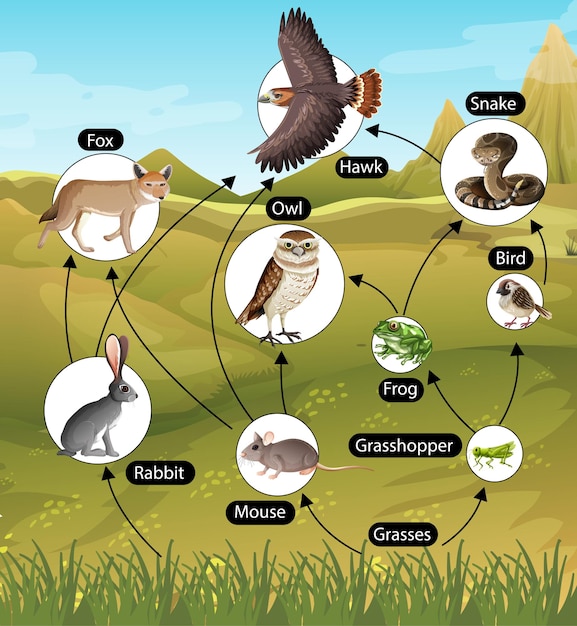
- Forests: Birds, mammals, insects adapted for climbing and foraging.
- Discuss adaptations of animals living in terrestrial environments:
- Encourage students to brainstorm other examples of animal adaptations and the ecosystems they inhabit.
IV. Activity: Ecosystem Match-Up (10 minutes)
- Divide students into small groups.
- Provide each group with a set of cards featuring images or descriptions of plants and animals, and corresponding ecosystem types.
- Instruct students to match each plant and animal to its appropriate ecosystem, justifying their choices based on the adaptations discussed in class.
- Have each group share their findings with the class.
V. Assessment (Ongoing)
- Observe student participation in class discussions.
- Evaluate student understanding based on their responses during the Ecosystem Match-Up activity.
- Collect the match-up cards and provide feedback.