Lesson Plan | Lesson Plan Tradisional | Value Equivalence: buying and selling
| Keywords | Buying and Selling, Change, Money, Payment Methods, Coins and Notes, Debit/Credit Cards, Digital Payments, Price and Value, Mathematical Operations, Financial Skills |
| Resources | Whiteboard and Markers or Chalkboard and Chalk, Toy Notes and Coins, Fake Debit/Credit Cards or Images, Sheets of Paper and Pencils, Projector (optional) for visual examples, Images of Products with Prices, Simple Calculators (optional) |
Objectives
Duration: (10 - 15 minutes)
The goal of this section is to create a solid foundation for students to grasp buying and selling activities, making them familiar with essential terms and concepts. By outlining these specific objectives, students will know what is expected and how the following activities connect to these goals.
Objectives Utama:
1. Understand basic buying and selling activities.
2. Calculate the change required in various transactions.
3. Recognize different payment and purchasing methods.
Introduction
Duration: (10 - 15 minutes)
This stage aims to present a relatable context for students, helping them connect the lesson to their everyday lives. By introducing the topic in an engaging manner, students are likely to feel more interested and motivated to learn. This foundational context paves the way for deeper explanations that will follow, aiding in their understanding of buying and selling concepts.
Did you know?
Did you know that trading and the use of money dates back thousands of years? In ancient times, essentials like salt, shells, or even cocoa beans were used as currency! Nowadays, we primarily use coins, notes, cards, and digital payments, but the core idea remains unchanged: exchanging something valuable for something else we need.
Contextualization
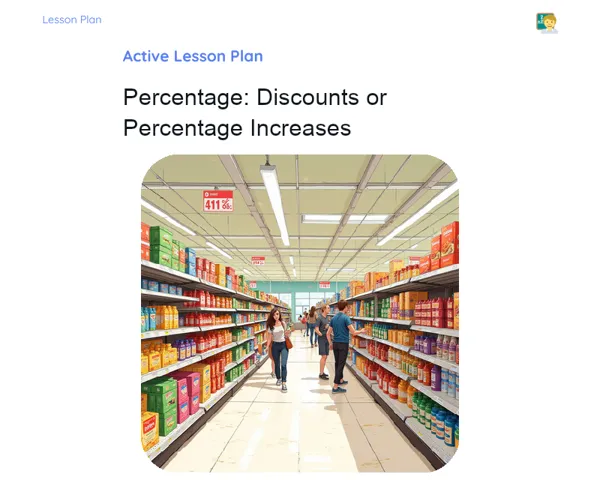
Begin the class by discussing a familiar activity: buying and selling, something we engage in almost daily. Ask students if they have accompanied their parents to the local grocery store or the nearby bakery to make a purchase. Clarify that through this act, they are participating in a buying and selling transaction, where money is exchanged for goods or services.
Concepts
Duration: (40 - 45 minutes)
The aim of this stage is to offer a comprehensive and practical comprehension of buying and selling activities. By discussing specific topics and addressing practical questions, students can apply theoretical ideas to real-life scenarios, thereby reinforcing their understanding of computing change and utilizing different payment methods.
Relevant Topics
1. What is buying and selling: Discuss that buying and selling are transactions we perform when we swap money for products or services. Emphasize the significance of these activities in our daily lives.
2. Money and its forms: Explain various forms of money, including coins, notes, debit/credit cards, and online payments. Provide a brief overview of how each of these forms is utilized.
3. Price and value: Describe the concept of price, which represents how much a product or service costs. Talk about how value can change based on the product and location.
4. Calculating change: Demonstrate how to figure out the change being returned after a purchase. Use straightforward examples, such as buying an item priced at ₹300 with a ₹500 note.
5. Payment methods: Illustrate different payment options, such as cash, cards, and digital wallets. Discuss the pros and cons of each payment method.
To Reinforce Learning
1. If John bought a toy for ₹150 and paid with a ₹200 note, how much change should he receive?
2. Maria bought 3 chocolates, each priced at ₹20. If she paid with a ₹100 note, how much change should she get?
3. If a candy costs ₹5 and you hand over a ₹10 note, how much change will you receive?
Feedback
Duration: (20 - 25 minutes)
This stage aims to ensure that students have a solid grasp of the concepts discussed, reinforcing their understanding through practical problem-solving and personal reflections. By discussing responses in depth and encouraging student participation through questions and reflections, we create an interactive learning environment where students can inquire, share insights, and deepen their comprehension of buying and selling activities.
Diskusi Concepts
1. Question 1: If John bought a toy for ₹150 and paid with a ₹200 note, how much change should he receive?
Explanation: Change is calculated by subtracting the price of the product from the amount paid. So, ₹200 - ₹150 = ₹50. Therefore, John should get ₹50 back. 2. Question 2: Maria bought 3 chocolates at ₹20 each. If she paid with a ₹100 note, how much change should she receive?
Explanation: First, calculate the total cost of the chocolates: 3 x ₹20 = ₹60. The change is the difference between what she paid and what the chocolates cost. Hence, ₹100 - ₹60 = ₹40. Thus, Maria should receive ₹40 back. 3. Question 3: If a candy costs ₹5 and you give a ₹10 note, how much change will you receive?
Explanation: The change amount is determined by subtracting the price from the payment made. Therefore, ₹10 - ₹5 = ₹5. Thus, you should receive ₹5 in change.
Engaging Students
1. ❓ Question: Can someone explain the importance of calculating change when making a purchase? 2. 🗣️ Reflection: How would shopping be if we didn’t have a change system? Would it be easier or trickier? Why do you think so? 3. 🤔 Question: Have you encountered payment methods other than cash or card? What were they? 4. 💡 Reflection: Recall a moment when you had to work out change. How did you figure it out? Was it straightforward or challenging?
Conclusion
Duration: (10 - 15 minutes)
The goal of this conclusion is to encapsulate and consolidate the knowledge gained during the lesson, ensuring that students emerge with a clear and practical understanding of the content. This final review also reinforces the significance of the topic in students' daily lives, encouraging them to apply what they've learned.
Summary
['Basics of buying and selling.', 'Forms of money: coins, notes, debit/credit cards, and digital payments.', 'Concept of price and value.', 'How to calculate change during purchases.', 'Payment methods along with their pros and cons.']
Connection
Throughout the lesson, students explored the principles of buying and selling and applied these concepts to practical problems. This approach helped solidify their understanding of how to calculate change and utilize various payment methods in real-world scenarios.
Theme Relevance
This topic is extremely vital for day-to-day life, as buying and selling are activities we routinely engage in. Grasping the methods to calculate change and selecting the most suitable payment option contributes to developing essential financial skills. Additionally, learning about the history and evolution of money enriches students' comprehension of the economy.