Lesson Plan | Teachy Methodology | Human Body: Nervous System
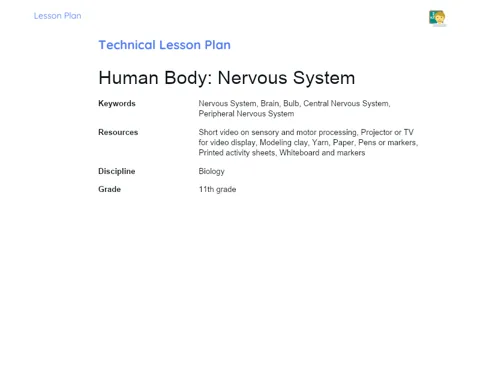
| Keywords | Nervous System, Human Body, Brain, Bulb, Central Nervous System, Peripheral Nervous System, Digital Methodology, Social Media, Augmented Reality, Gamification, Kahoot, Interactive Quiz, 360° Feedback, Group Discussion, Collaborative Learning, Digital Education |
| Required Materials | Phones or computers with internet access, Video and image editing apps (Canva, InShot), Human anatomy augmented reality app (Human Anatomy Atlas), Kahoot! platform, Multimedia projector, Stable Internet connection, Educational material about the nervous system (texts, images, videos) |
Objectives
Duration: 10 - 15 minutes
The purpose of this step is to clearly establish the objectives of the lesson, providing guidance for subsequent activities. Students should be aware of the skills they will develop and the specific knowledge they will acquire, enabling more directed and efficient learning. Furthermore, the objectives serve to align the expectations of the teacher and the students, ensuring that the entire class works in sync to achieve the same results.
Main Objectives
1. Identify the organs of the nervous system, such as the brain and the bulb, and describe their functions.
2. Understand the distinction between the central and peripheral nervous systems and their respective roles.
Side Objectives
- Familiarize with the scientific terminology associated with the nervous system.
- Stimulate interest and curiosity about the importance of the nervous system in the functioning of the human body.
Introduction
Duration: 10 - 15 minutes
The purpose of this step is to awaken students' interest in the topic and promote a collaborative learning environment. Utilizing technologies that are part of students' routine, such as phones, makes the lesson more dynamic and connected to their reality. Additionally, the key questions help review prior knowledge and encourage active participation from the start.
Warming Up
To start the lesson on the nervous system, present a brief introduction about the complexity and importance of this system in the human body. Explain how it is responsible for coordinating our actions, emotions, and thoughts. Then, ask students to use their phones to find and share an interesting fact about the nervous system. This encourages engagement and curiosity right at the beginning of the lesson.
Initial Reflections
1. What do you already know about the functions of the brain?
2. What is the difference between the central and peripheral nervous systems?
3. How does the nervous system communicate with other parts of the body?
4. Why is the nervous system vital for the functioning of the human body?
5. Did anyone find a curious fact about the nervous system that they would like to share?
Development
Duration: 70 - 75 minutes
The purpose of this stage is to provide an active and deeply engaging learning experience, allowing students to apply the knowledge acquired in innovative and contextualized ways. The proposed activities aim to stimulate creativity, collaboration, and the use of modern technologies, aligning with digital methodology to make learning more dynamic and connected with the students' reality.
Activity Suggestions
It is recommended that only one of the suggested activities be carried out
Activity 1 - Neuro-Influencers: Creating Scientific Content
> Duration: 60 - 70 minutes
- Objective: Stimulate students' creativity and apply their knowledge of the nervous system in a modern and relevant context, utilizing digital communication skills.
- Description: Students take on the role of digital influencers specialized in science and create educational content about the nervous system to post on fictional social media. They should use texts, images, and videos to explain the organs of the nervous system and their functions, as well as differentiate the central nervous system from the peripheral one.
- Instructions:
-
Divide the class into groups of up to 5 students.
-
Each group must choose a fictional social media platform (Instagram, TikTok, YouTube, etc.) to create their content.
-
Students will have 10 minutes to plan the type of content they will create and how they will approach the topic.
-
Each group must produce at least three posts that include explanatory texts, images, and/or videos.
-
Students can use video and image editing apps, such as Canva and InShot, to create the materials.
-
Encourage students to use hashtags and attractive calls to engage their audience.
-
After creating the content, each group will present their posts to the rest of the class, explaining their design choices and didactic approach.
Activity 2 - Unveiling the Nervous System with Augmented Reality
> Duration: 60 - 70 minutes
- Objective: Deepen understanding of the nervous system through a visual and interactive experience, facilitating comprehension of its structure and functioning.
- Description: Students will use augmented reality (AR) apps to virtually explore the human nervous system. They will investigate each organ and part of the system, learning about their functions and interactions in an interactive and visual manner.
- Instructions:
-
Divide the class into groups of up to 5 students.
-
Instruct students to download a human anatomy augmented reality app (e.g., Human Anatomy Atlas) on their phones.
-
Students should explore the nervous system using the AR tool, closely observing organs such as the brain, the bulb, and other components of the central and peripheral nervous systems.
-
Each group must select two specific parts of the nervous system for deeper study.
-
Students must prepare a small presentation explaining the function and importance of the selected parts, using screenshots and videos from the AR app.
-
Groups present their findings to the class, using multimedia projection when possible.
Activity 3 - Interactive Quiz: The Nervous System Challenge
> Duration: 60 - 70 minutes
- Objective: Review and consolidate knowledge of the nervous system dynamically and competitively, promoting engagement and teamwork.
- Description: A gamified competition where students, divided into groups, participate in an interactive quiz about the nervous system. Using platforms like Kahoot!, they will answer multiple-choice questions and complete challenges that test their knowledge and mental agility.
- Instructions:
-
Divide the class into groups of up to 5 students.
-
Instruct students to access the Kahoot! platform on their phones or computers.
-
Prepare a quiz with multiple-choice questions related to the nervous system, including identification of organs, functions, and differences between the central and peripheral nervous systems.
-
Explain that the quiz will be conducted in real-time, and groups will have to answer quickly to earn points.
-
During the quiz, add special rounds with practical challenges, such as finding specific information online or solving problems based on fictional clinical scenarios.
-
At the end of the quiz, the group with the highest score will be declared the winner and may receive a symbolic reward, such as a digital merit certificate.
Feedback
Duration: 20 - 25 minutes
🎯 Purpose: The purpose of this stage is to consolidate learning and promote reflection among students. Group discussion encourages the exchange of ideas and recognition of the different approaches used. 360° feedback offers an opportunity for personal and collective development, helping students improve their communication, collaboration, and constructive criticism skills.
Group Discussion
📢 Group Discussion: Promote a group discussion where all students share their experiences and conclusions. Suggested agenda:
- Start by thanking the students for their effort and engagement in the activities.
- Ask each group to present a brief summary of what they created and the main discoveries they made.
- Encourage students to ask questions and comment on their peers' presentations, promoting a rich exchange of ideas.
Explain that this discussion is an opportunity to consolidate learning and reflect on the knowledge acquired.
Reflections
1. 🧠 What were the biggest difficulties you encountered while creating digital content about the nervous system? 2. 🧩 How did the use of augmented reality help you better understand the structure and functioning of the nervous system? 3. 🔍 What do you think you could improve in your future scientific content creations?
360° Feedback
🤝 360° Feedback: Instruct students to conduct a 360° feedback step. Ask each student to give constructive feedback to their group peers. Guide them to focus on three aspects: what was done well, what could be improved, and suggestions for improvement. Emphasize the importance of being respectful and specific, avoiding generalizations.
Conclusion
Duration: 10 - 15 minutes
🎯 Purpose: This final stage aims to consolidate the main points discussed during the lesson and demonstrate the relevance of the topic in the current context and in the students' daily lives. By connecting the content with practical applications and modern dynamics, it seeks to reinforce the importance and utility of learning, in addition to concluding the class in an engaging and positive way.
Summary
🎉 Fun Summary: Good news, neuro-explorers! Today, we navigated the fascinating nervous system 🧠, getting to know its main organs, like the brain and the bulb, and unveiling their functions. You shined in differentiating the central nervous system (the CEO of the body) from the peripheral (the agile messengers spreading orders throughout the body). And all of that with augmented reality and digital adventures! 🚀
World Connection
🌍 In the Modern World: Today's lesson showed how neuroscience is present in our digital everyday life. The augmented reality tools we used are examples of how technology is advancing in the medical field and education, making learning more interactive and accessible. Moreover, understanding the nervous system is crucial for comprehending various cutting-edge technologies, such as brain-computer interfaces and artificial intelligence! 🤖
Practical Application
🔍 Realistic Applications: Understanding the nervous system is not only crucial for the health field but also essential in various technological areas. The knowledge acquired today helps improve mental health, develop advanced treatments, and create technologies that interact more efficiently and intuitively with humans. More than theory, this knowledge is daily practice and innovation! 💡