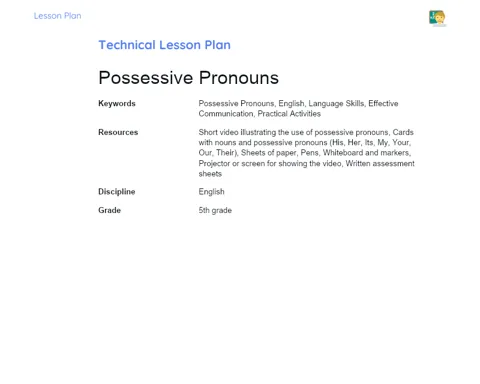
Lesson Plan | Teachy Methodology | Vocabulary: Food, Objects and Parts of the House
| Keywords | Food Vocabulary, Household Objects, English, Digital Methodology, Digital MasterChefs, Digital Influencers, Interactive Quiz, Collaboration, Creativity, Technology, High School, Social Media, Active Learning |
| Required Materials | Cell phones or tablets with internet access, Computers with access to online tools (Canva, PowerPoint), Social media platforms (e.g., Instagram), Interactive quiz platforms (e.g., Kahoot, Quizizz), Materials for notes (paper, pen, or digital note-taking apps), Projector and/or screen for presentations, Photos and illustrations of foods and household objects |
Objectives
Duration: 10 to 15 minutes
The aim of this stage is to ensure that students are aware of the lesson objectives and understand the importance of vocabulary related to foods and household items in the context of the English language. This will help guide practical activities and apply the knowledge previously acquired in a contextualized manner.
Main Objectives
1. Identify and understand the vocabulary related to common foods, such as meats, vegetables, and pasta.
2. Apply the vocabulary learned in practical and everyday contexts.
3. Develop communication skills in English by describing foods and household objects.
Side Objectives
- Encourage collaborative work and information exchange among students.
- Promote the use of digital platforms and online resources to reinforce learning.
Introduction
Duration: 10 to 15 minutes
The aim of this stage is to ensure that students are aware of the lesson objectives and understand the importance of vocabulary related to foods and household items in the context of the English language. This will help guide practical activities and apply the knowledge previously acquired in a contextualized manner.
Warming Up
To start today's lesson on vocabulary of foods and household objects, explain that students will use their prior knowledge to explore and deepen their language skills. Ask students to use their phones to find an interesting fact about foods or parts of the house in English. After a few minutes, ask them to share these facts with the class, fostering an interactive and digital environment.
Initial Reflections
1. What are some common foods you found in your research?
2. Do you know the names of household objects and parts of the house in English that are not commonly mentioned?
3. Why is it important to know vocabulary related to foods and household objects?
4. How can the vocabulary learned be applied in everyday situations?
5. Do you think social media can help improve the learning of a new language? How?
Development
Duration: 65 to 75 minutes
The aim of this stage is to provide a practical and contextualized immersion in the use of vocabulary related to foods and household objects, promoting collaboration, creativity, and the use of technology as a learning tool.
Activity Suggestions
It is recommended that only one of the suggested activities be carried out
Activity 1 - 🚀 Digital MasterChefs
> Duration: 60 to 70 minutes
- Objective: Apply food vocabulary in a practical and creative context, developing writing and speaking skills in English.
- Description: Students will be divided into groups and participate in a digital culinary challenge. They must create a complete menu using the food vocabulary they have learned. Using tools like Canva or PowerPoint, each group will present the menu of a fictitious restaurant in English, including detailed descriptions of the dishes and ingredients.
- Instructions:
-
Divide the class into groups of no more than 5 students.
-
Each group must create a digital menu using online tools like Canva or PowerPoint.
-
The menu must include at least 5 main dishes, 3 sides, and 2 desserts, all described in English.
-
Students must use the vocabulary related to meats, vegetables, and pasta learned previously.
-
Encourage the use of visual elements such as photos and illustrations to make the menu more appealing.
-
Each group will present their menu to the class, explaining the dishes and justifying their choices.
Activity 2 - 📸 Digital Cooking Influencers
> Duration: 60 to 70 minutes
- Objective: Encourage the practical application of vocabulary in a modern and relevant context, promoting creative writing and the use of technology.
- Description: Students will take on the role of digital influencers and create social media posts about foods and household objects. Each group must create a sequence of at least five posts on Instagram (or a similar platform), using images and descriptions in English. They should cover different types of foods and household objects, utilizing the vocabulary learned.
- Instructions:
-
Divide the class into groups of no more than 5 students.
-
Each group must create a sequence of posts for a digital influencer account focused on foods and household objects.
-
Use tools like Instagram (create a fictitious account) or other social media platforms.
-
Each post must include an image (can be a photo, illustration, or collage) and a detailed description in English.
-
Students must use the vocabulary of foods and household objects they learned.
-
Groups should comment on each other's posts, encouraging interaction and practice of English.
Activity 3 - 🕹️ Interactive Quiz: Master of the House
> Duration: 60 to 70 minutes
- Objective: Reinforce the vocabulary learned in a playful and interactive way, stimulating collaboration and healthy competition.
- Description: Students will participate in an interactive quiz using platforms like Kahoot or Quizizz. The quiz will focus on vocabulary related to foods and household objects. Each group must create a series of questions and answers, and then all groups will participate in the quiz created by their peers.
- Instructions:
-
Divide the class into groups of no more than 5 students.
-
Each group must create a series of 10 questions about food and household object vocabulary using Kahoot or Quizizz.
-
The questions must vary in types (multiple choice, true/false, etc.) and levels of difficulty.
-
After creating the questions, the groups will share their quizzes, and all students will participate, answering the questions made by their peers.
-
The groups must justify the correct answers, explaining the vocabulary and its use in practical contexts.
Feedback
Duration: 15 to 20 minutes
🎯 Purpose: The aim of this stage is to foster reflection on learning, promote the exchange of knowledge and experiences among students, and encourage the practice of constructive feedback. This helps consolidate the vocabulary learned and develop skills of collaboration and communication, essential for using English in practical and modern contexts.
Group Discussion
💬 Group Discussion: Promote a group discussion with all students, where groups share what they learned from the experience and their conclusions. Suggest the following outline to introduce the discussion:
- Introduction: Start by thanking the students for their effort and participation in the activities.
- Initial Questions: Ask each group to highlight one or two things they learned during the activity.
- Sharing: Encourage the groups to discuss how they applied the vocabulary and what they found most challenging.
- Conclusions: End with a reflection on how these activities can aid in continuous English learning.
Reflections
1. 🤔 Reflection Questions:
- What did you find most challenging when creating the digital menus or social media posts?
- How do you believe these activities can improve your vocabulary and communication skills in English in your daily life?
- What other digital tools do you think could be used to learn English in a fun and interactive way?
360° Feedback
🔄 360° Feedback: Instruct students to conduct a 360° feedback stage, where each student must receive feedback from other students in the group they worked with in the activity. Guide the class to ensure the feedback is constructive and respectful. Suggest they follow the format below:
- Positive Aspects: Highlight what each group member did well.
- Areas for Improvement: Suggest one or two areas where the colleague can improve.
- Constructive Feedback: Be specific and kind in your observations, focusing on how each one can improve in future activities.
Conclusion
Duration: 10 to 15 minutes
🎯 Purpose 🎯
The aim of this stage is to review in a playful and engaging way the main points covered in the lesson, strengthen students' connection to the content, and highlight the practical relevance of the vocabulary learned for their daily lives and digital interaction. This helps consolidate knowledge and keeps students motivated for continuous learning.
Summary
🔔 Fun Summary 🔔
Let's do a quick "flashback"! 🌟 Today, we navigated the world of foods, objects, and parts of the house in English. From taking on the role of Digital MasterChefs creating amazing menus, to becoming Digital Cooking Influencers, sharing experiences on social media, and of course, testing our knowledge with an Interactive Quiz. It was a true culinary and linguistic journey! 🍕🏡📱
World Connection
🌍 In Today's World 🌍
We live in an increasingly connected world, where social media dominates communication and technology facilitates learning. Understanding the vocabulary of foods and household objects in English not only helps us appreciate different cultures but also enables us to interact more effectively in the modern digital environment. Today's lesson showed how we can use these tools to learn in a practical and fun way.
Practical Application
📌 Everyday Applications 📌
Knowing the vocabulary related to foods and household objects in English is essential for various everyday situations, from traveling and understanding an international menu to watching recipe videos on YouTube or following digital influencers from other countries. This knowledge opens doors to new cultural experiences and enhances communication in a globalized world.