Lesson Plan | Lesson Plan Tradisional | Climate: Human Actions and Climate Change
| Keywords | Climate, Climate change, Deforestation, Industries, Cars, Greenhouse gases, Consequences, Mitigating actions, Global warming, Renewable energies, Energy efficiency, Sustainable transportation |
| Resources | Whiteboard and markers, Projector and computer for presentation slides, Slides on climate change, Short clips on deforestation, industrial pollution, and vehicle emissions, Paper and pens for students to take notes, Additional reading material on mitigation strategies, Posters or infographics on the effects of climate change, Examples of renewable energy products |
Objectives
Duration: 10 - 15 minutes
The aim of this section of the lesson plan is to present students with a straightforward and detailed outline of the objectives they will achieve during this class. This will help sharpen their focus and underline the importance of the topic at hand, while also preparing them for further discussions on how human actions affect our planet's climate.
Objectives Utama:
1. Identify the key human activities contributing to climate change, such as industrial processes, vehicular emissions, and deforestation.
2. Understand how these activities are affecting the climate of our planet.
3. Recognize the significance of mitigation measures to lessen the impacts of climate change.
Introduction
Duration: 10 - 15 minutes
🎯 Purpose: The goal of this segment is to create an engaging and informative context for students, introducing them to the topic of climate change and human influences. This will help pique their interest and prepare them for a more in-depth exploration of the topics we’ll cover throughout the lesson.
Did you know?
🔍 Curiosity: Did you know that every time we take a ride in our cars or motorcycles, we are releasing gases that contribute to global warming? In addition, deforestation in critical areas like the Amazon not only diminishes the number of trees that absorb carbon dioxide but releases massive amounts of this gas into the air. These are just a few examples of how our everyday actions can affect the climate on a global scale.
Contextualization
🌍 Context: Begin the lesson by giving a comprehensive introduction to the ideas of climate and climate change. Clarify that climate refers to the long-term patterns of atmospheric conditions in a region, distinguishing it from weather, which can change from day to day. Introduce climate change as significant, enduring shifts in global climatic patterns, and link this issue to the accelerating impact of human activities.
Concepts
Duration: 40 - 50 minutes
🎯 Purpose: The purpose of this phase of the lesson plan is to provide students with a thorough and clear understanding of how human activities, such as deforestation, industrial processes, and vehicle usage, contribute to climate change. This section will also focus on the ramifications of these changes and explore actions that can be undertaken to ease their effects. The proposed questions will assist students in reflecting on and applying the knowledge gained.
Relevant Topics
1. 🌿 Deforestation: Explain how large-scale removal of forests, especially in the Amazon, impacts climate change. Describe how cutting down forests releases substantial carbon dioxide (CO2) into the atmosphere, as trees play a vital role in carbon storage. When chopped down and burned, this carbon is emitted, raising CO2 levels—one of the primary greenhouse gases.
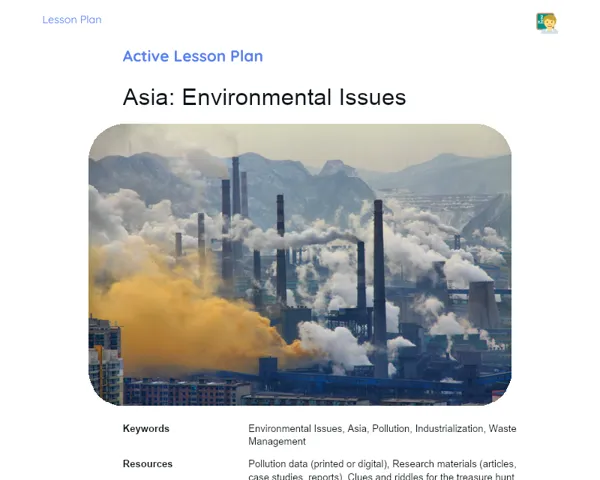
2. 🏭 Industries: Discuss the contribution of industries to greenhouse gas emissions. Explain that many manufacturing sectors utilize fossil fuels (like coal and oil) for energy, which leads to the release of CO2 and other pollutants. Also, address the emissions of methane (CH4) and nitrogen oxides (NOx), potent greenhouse gases.
3. 🚗 Cars: Talk about how vehicle usage contributes to climate change. Explain that petrol and diesel cars emit both CO2 and other pollutants through their exhaust systems. Describe how burning fossil fuels in vehicle engines escalates the concentration of greenhouse gases in the environment.
4. 💨 Greenhouse Gases: Define greenhouse gases and their role in global warming. Explain how these gases (like CO2, CH4, and NOx) trap heat in the atmosphere, creating a 'greenhouse effect' that elevates global temperatures. Describe how human activities have heightened the presence of these gases.
5. 🌡️ Consequences of Climate Change: Outline the effects of climate change, such as rising global temperatures, melting ice caps, increasing sea levels, and extreme weather conditions (like floods and droughts). Explain how these changes impact ecosystems, biodiversity, and human communities.
6. 🌍 Mitigating Actions: Discuss measures we can take to mitigate climate change, like reducing deforestation, utilizing renewable energy sources (such as solar and wind), enhancing energy efficiency, and embracing sustainable transport methods (like cycling and using public transport).
To Reinforce Learning
1. 1. How does deforestation contribute to the increased levels of carbon dioxide in the atmosphere?
2. 2. What are the most common greenhouse gases and their influence on global climate?
3. 3. What practical steps can we take in our everyday lives to lessen our contribution to climate change?
Feedback
Duration: 20 - 25 minutes
🎯 Purpose: The aim of this part of the lesson plan is to review and consolidate what students have learned during the lesson. Discussing the questions will allow students to reflect on the content learned, while engagement questions will encourage critical thinking and the practical application of their knowledge. This phase also offers a chance to clarify any doubts and deepen their understanding of the subjects covered.
Diskusi Concepts
1. 1. Explain how deforestation leads to increased carbon dioxide in the atmosphere: Deforestation, particularly in regions like the Amazon, significantly contributes to carbon dioxide (CO2) emissions. Trees store carbon; therefore, when they are cut and burnt, CO2 is released into the atmosphere, aggravating the greenhouse effect. Moreover, the reduction in forest cover limits the earth's capacity to absorb CO2, worsening the situation. 2. 2. What are the main greenhouse gases and how do they impact the global climate? The primary greenhouse gases include carbon dioxide (CO2), methane (CH4), and nitrogen oxides (NOx). These gases trap heat within the atmosphere, resulting in a 'greenhouse effect' that elevates global temperatures. CO2 largely comes from the burning of fossil fuels and deforestation, while CH4 originates from agricultural practices and waste decomposition. NOx is emitted from transport and industrial activities. A higher concentration of these gases in the atmosphere leads to global warming and climate change. 3. 3. What actions can we adopt in our daily lives to reduce our contribution to climate change? Individuals can incorporate several actions into their lifestyles to minimize their impact on climate change, such as using public transport instead of private cars, reducing meat consumption (which contributes to higher CH4 emissions), practicing recycling to lessen waste, conserving energy by using LED bulbs and efficient appliances, and supporting renewable energy sources like solar and wind.
Engaging Students
1. 1. Encourage students to discuss: 'What other human activities can you think of that might contribute to climate change? Why do you think so?' 2. 2. Prompt students to consider: 'In what ways could climate change affect our lives and those of people around the world?' 3. 3. Stimulate dialogue: 'What initiatives do you think governments and businesses should undertake to help mitigate climate change?' 4. 4. Ask students to share: 'What little changes can you start making today to help fight climate change?'
Conclusion
Duration: 10 - 15 minutes
The purpose of this section is to reinforce students' learning by summarizing the key points discussed in the lesson, underlining the link between theory and practice, and stressing the relevance of the topic to their lives. This ensures that students leave with a lucid understanding of the content discussed, which they can actively apply.
Summary
['Climate refers to the long-term patterns of atmospheric conditions in a particular area, while weather can fluctuate from day to day.', 'Climate change signifies substantial and prolonged transformations in global climate patterns, driven largely by human activities.', 'Deforestation leads to the release of considerable amounts of carbon dioxide (CO2) into the atmosphere, thereby fueling the greenhouse effect.', 'Industries contribute to greenhouse gas emissions, including CO2, methane (CH4), and nitrogen oxides (NOx), primarily due to fossil fuel usage.', 'Vehicles that run on petrol or diesel add to the rise of greenhouse gas concentrations in the atmosphere.', 'Greenhouse gases like CO2, CH4, and NOx retain heat in the atmosphere, raising global temperatures.', 'Climate change has consequences that include increasing global temperatures, melting ice caps, and more frequent extreme weather events.', 'Mitigation strategies involve decreasing deforestation, harnessing renewable energy, enhancing energy efficiency, and adopting sustainable transport options.']
Connection
The lesson interlinked theoretical aspects of climate change with practical examples of human activities, such as deforestation, industrial practices, and car usage, which directly influence our climate. Furthermore, it presented actionable measures that students can incorporate into their daily lives to help lessen the impact of climate change.
Theme Relevance
The issue of climate change is of utmost importance for students as their individual and collective actions critically affect the environment. Gaining insight into how human actions influence climate and exploring mitigation strategies enables students to become conscientious and engaged citizens committed to preserving the planet. For instance, opting for more public transport or reducing meat consumption can directly contribute to lowering greenhouse gas emissions.