Lesson Plan | Socioemotional Learning | Europe: Environmental Issues
| Keywords | Geography, Environmental Issues, Europe, Acid Rain, Rising Sea Levels, Loss of Biodiversity, Socio-emotional Skills, Self-awareness, Self-control, Responsible Decision Making, Social Skills, Social Awareness, Guided Meditation, Map, Sustainable Solutions |
| Resources | Maps of Europe, Colored markers, Information sheets on environmental issues, Comfortable seating, Controlled lighting environment, Quiet space for meditation, Sheets of paper, Pens |
| Codes | - |
| Grade | 9th grade |
| Discipline | Geography |
Objective
Duration: (10 - 15 minutes)
This stage aims to build a strong foundation on environmental issues in Europe, enabling students to effectively identify and comprehend these challenges. It also seeks to foster socio-emotional skills like self-awareness and responsible decision-making by discussing the impacts of human activities on the European environment.
Objective Utama
1. Identify the key environmental challenges faced in Europe, such as acid rain, rising sea levels, and loss of biodiversity.
2. Understand the reasons and effects of human activities on the European ecosystem and how these activities influence the environment.
3. Enhance skills to accurately label environmental issues and discuss effective ways to express concerns and propose solutions.
Introduction
Duration: (15 - 20 minutes)
Emotional Warmup Activity
Inner Journey: Guided Meditation
The emotional warm-up activity here is Guided Meditation. This technique aids students in centering themselves in the moment, alleviating anxiety, and sharpening their focus. In guided meditation, the teacher leads the students through a process of relaxation, enabling them to connect more deeply with their emotions.
1. Prepare the Environment: Ask students to sit comfortably, ensuring their backs are straight and feet are flat. Dim the lights if possible and minimize distractions.
2. Start the Meditation: Instruct students to close their eyes and focus on their breathing. Guide them to take a deep breath in through the nose, hold for a few seconds, and gently breathe out through the mouth.
3. Guide the Meditation: Use a calm voice to guide students through relaxation. Have them picture a serene location, like a beach or a quiet forest, and concentrate on the sensations there (the ocean waves, birds chirping, etc.).
4. Explore Emotions: Encourage students to recognize and acknowledge their emotions during meditation without trying to control or judge them.
5. Conclude the Meditation: Slowly bring students back to the present moment by asking them to wiggle their fingers and toes before opening their eyes. Invite those who are comfortable to share their feelings during the meditation.
Content Contextualization
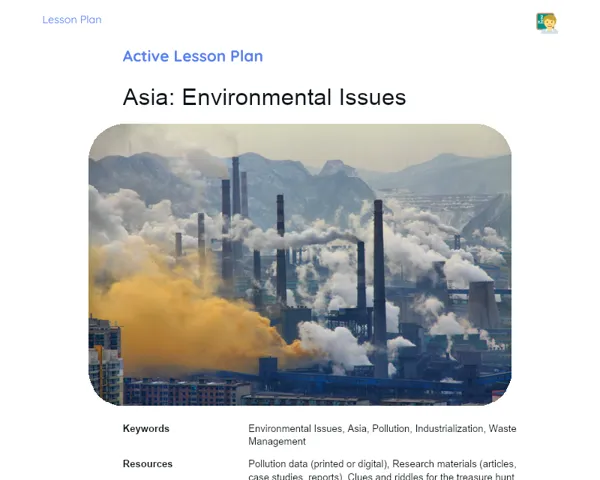
👩🏫🌍 Europe confronts a range of environmental challenges impacting both nature and human way of life. For instance, acid rain from industrial emissions damages forests and cultural landmarks. Rising sea levels pose a threat to coastal communities, while the loss of biodiversity risks entire ecosystems. These problems go beyond science; they deeply affect the emotions of the communities enduring these changes. 🌱😔
By learning and discussing these issues, students gain insights into geography and environmental science, while also enhancing their social awareness and decision-making skills. They come to understand the repercussions of human actions on our planet and recognize how they can actively participate in finding sustainable solutions. This comprehension is pivotal in nurturing individuals who are both aware and emotionally intelligent, equipped to make choices that benefit the environment and society at large.
Development
Duration: (60 - 75 minutes)
Theory Guide
Duration: (20 - 25 minutes)
1. Acid Rain: Clarify that acid rain primarily originates from the release of sulfur dioxide (SO2) and nitrogen oxides (NOx) into the atmosphere. These pollutants combine with water, oxygen, and other substances to create acids that fall as rain. Its impacts include the acidification of lakes, damage to forests, and deterioration of historical structures.
2. Rising Sea Levels: Explain that rising sea levels directly result from global warming, spurred by greenhouse gas emissions. Gases like carbon dioxide (CO2) trap heat in the atmosphere, melting polar ice caps and causing seawater expansion. This leads to flooding in coastal regions, beach erosion, and loss of habitat.
3. Loss of Biodiversity: Discuss how biodiversity loss in Europe arises from various factors, including habitat destruction, pollution, climate change, and the introduction of invasive species. Biodiversity is vital for ecosystem stability, and its decline can disrupt essential services like pollination and water purification.
4. Causes and Consequences of Human Actions: Talk about how activities in industry, agriculture, and urbanization exacerbate environmental problems. For instance, burning fossil fuels for energy releases substantial pollutants. Intensive farming practices can degrade soil and contaminate water resources.
5. Concrete Examples and Analogies: Share specific instances, such as the Black Forest in Germany suffering from acid rain, and cities like Venice in danger due to rising sea levels. Use analogies like comparing biodiversity loss to a domino effect, where the fall of one piece can lead to many others collapsing.
Activity with Socioemotional Feedback
Duration: (35 - 40 minutes)
Mapping Environmental Issues in Europe
Students will work in groups, using maps of Europe to pinpoint and highlight the primary environmental challenges discussed in class. Each group will select an issue (acid rain, rising sea levels, or loss of biodiversity) to investigate its location, causes, consequences, and potential solutions. Later, groups will present their findings to the class.
1. Group Division: Organize the class into groups of 4 to 5 students.
2. Distribution of Materials: Provide each group with a map of Europe, colored markers, and information sheets on environmental issues.
3. Identification and Marking: Instruct groups to identify and color-code the regions impacted by their chosen environmental issue on the map.
4. Development of Solutions: Each group should brainstorm potential solutions to the environmental problem they identified.
5. Preparation for Presentation: Groups will prepare a brief presentation (3-5 minutes) summarizing their findings for the class.
6. Group Presentations: Groups will present their findings, emphasizing the emotions associated with environmental issues and their societal impact.
Discussion and Group Feedback
During presentations, use the RULER method to guide discussions. Start by helping students recognize emotions linked to the environmental challenges highlighted. Ask how they think affected communities feel and their own emotions while learning these issues. Next, understand the reasons behind these feelings, fostering discussions on empathy and understanding different perspectives.
Name emotions precisely, helping students identify terms like 'frustration,' 'concern,' or 'hope.' Encourage them to express these emotions respectfully and constructively. Lastly, discuss ways to regulate these emotions, promoting resilience and positive actions that can help address environmental issues.
Conclusion
Duration: (20 - 25 minutes)
Reflection and Emotional Regulation
Encourage students to write a short reflection on the challenges they faced during the lesson and how they coped with their emotions. Prompt them with questions like: 'What did you find most challenging today?' and 'How did you handle those challenges?' Alternatively, facilitate a group discussion where students can share their feelings and strategies. They should discuss how learning about environmental issues affected their perspectives and emotions.
Objective: The aim of this activity is to promote self-reflection and emotional regulation, assisting students in identifying effective coping strategies for difficult situations. Reflecting on their emotions and conduct will foster greater self-awareness and self-control, which are essential for their personal and academic development.
Glimpse into the Future
Emphasize the importance of setting both personal and academic objectives stemming from the lesson. Have each student write down one personal goal and one academic goal. For instance, a personal goal could be 'to save water at home,' while an academic goal may be 'to learn more about sustainable practices to prevent biodiversity loss.'
Penetapan Objective:
1. Save water at home.
2. Learn about sustainable practices for biodiversity conservation.
3. Get involved in local sustainability initiatives.
4. Enhance understanding of climate change impacts.
5. Create a personal plan to lower carbon footprint. Objective: This section aims to empower students and ensure the practical application of knowledge, fostering continuous personal and academic growth. By identifying attainable goals, students can integrate what they've learned into their everyday lives and aid in addressing the environmental issues at hand.