Lesson: magnetism
Angky Gavriel
Hands-on Activity
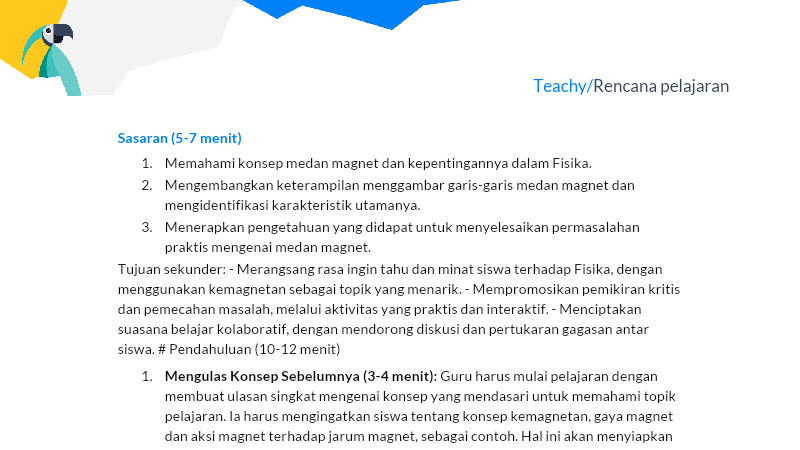
Begin the lesson with the 'Hands-on Activity: Building an Electromagnet'. This interactive session allows students to construct their own electromagnets using batteries, wires, and nails. Guide them through the process step-by-step, ensuring they understand how electricity can create a magnetic field. Encourage students to experiment with different configurations and observe the strength of their electromagnets. This practical experience will solidify their understanding of magnetism in a tangible way. Tips: Remind students to connect the wires correctly to avoid short circuits, and encourage them to discuss their observations with peers to enhance collaborative learning.




Theoretical Support
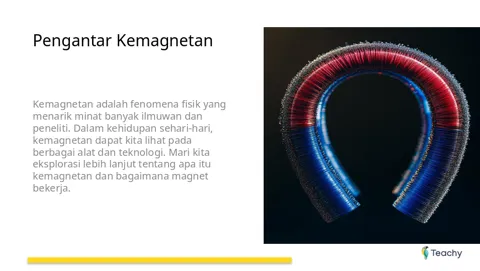
After the hands-on activity, provide students with the 'Magnetism: Magnetic Field Presentation'. This presentation will serve as a visual aid to reinforce the concepts they just explored. Use it to explain the invisible magnetic field produced by magnets, emphasizing the north and south poles. Encourage students to ask questions and relate the theoretical aspects to their practical experience. Additionally, suggest they refer to the 'Expository Methodology | Magnetism: Magnets | Lesson Plan' for deeper insights into the subject. Tips: Use real-life examples of magnets in technology to make the content relatable and engaging.


Test Preparation
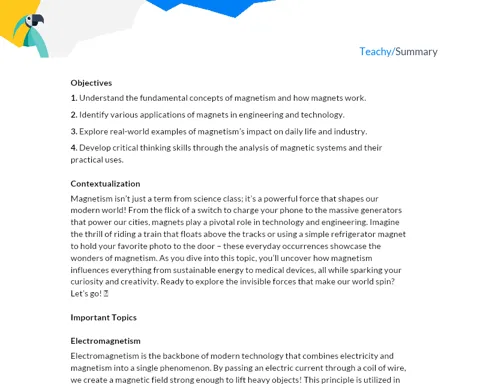
Conclude the lesson with the 'Summary of Magnetism Applications' and the 'Practice List - Magnetism: Magnets'. Start by summarizing the key applications of magnetism in various fields, particularly in engineering and technology, to highlight its relevance. Then, distribute the practice list to help students review and reinforce their understanding. This will prepare them for any upcoming assessments. Tips: Encourage students to form study groups to discuss the applications and quiz each other using the practice list, making the review process more interactive and less tedious.




Need custom lessons for your students?
At Teachy, you can design and plan your lessons. Start creating now!
Those who saw this lesson also liked...



Join a community of teachers directly on WhatsApp
Connect with other teachers, receive and share materials, tips, training, and much more!

Reinvent teaching













Resources
2026 - All rights reserved