Bone Histology: Structure and Cells Walkthrough
Section role: This presentation supports the 'Decoding the Osteon' section by providing visual aids and structured information as the teacher formalizes concepts introduced in the previous 'Fracture Case Files' activity. Slides: (1) Title Slide: 'Decoding the Osteon: The Microscopic City of Bone' — introduces the concept of bone as a dynamic, organized tissue. (2) Review: Macroscopic Bone Anatomy — bullets: briefly recaps long bone features like diaphysis and epiphysis, distinguishing compact from spongy bone based on texture and location (linking to Section 2's forensic teams task), visual: labeled diagram of a long bone cross-section. (3) The Functional Unit: The Osteon (Haversian System) — bullets: defines the osteon as the fundamental unit of compact bone, highlights its role in strength and nutrient delivery, visual: high-contrast diagram of a single osteon. (4) The Osteon's Components: Lamellae & Canals — bullets: describes concentric lamellae, central (Haversian) canals, and perforating (Volkmann's) canals, explaining their arrangement and function, visual: detailed cross-section of multiple osteons with labeled parts. (5) The 'Construction Crew': Bone Cells — bullets: introduces Osteoblasts (bone formation), Osteoclasts (bone resorption), and Osteocytes (mature bone maintenance), explaining their specific roles in bone remodeling and homeostasis, visual: micrographs or illustrations of each cell type. (6) Micro-Architecture: Lacunae and Canaliculi — bullets: explains lacunae as homes for osteocytes and canaliculi as channels for communication and nutrient exchange, emphasizing the living aspect of bone, visual: zoomed-in view of osteocytes in lacunae connected by canaliculi. (7) The Protective Layers: Periosteum & Endosteum — bullets: defines these membranes and their importance in bone growth, repair, and nutrient supply (linking to bone healing discussed in Section 1), visual: diagram showing location of periosteum and endosteum. (8) Bone Matrix: Collagen & Minerals — bullets: emphasizes the dual composition of bone (collagen for flexibility, minerals for hardness), addressing misconceptions about bone brittleness, visual: molecular representation or analogy illustrating the collagen-mineral interaction. Closing slide: 'How do the specialized cells and structures within an osteon allow a broken bone to heal?' — prompts students to connect microscopic anatomy to the dynamic nature of bone, setting up the assessment in Section 4.

Need customized slides for your lessons?
I can generate slides, activities, summaries, and 60+ types of materials. That's right, no sleepless nights here :)
People who viewed this slide also liked...
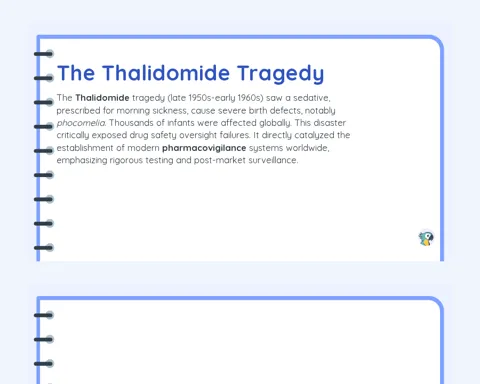

Presentation
Pharmacovigilance

فاطمه نجاتی
-
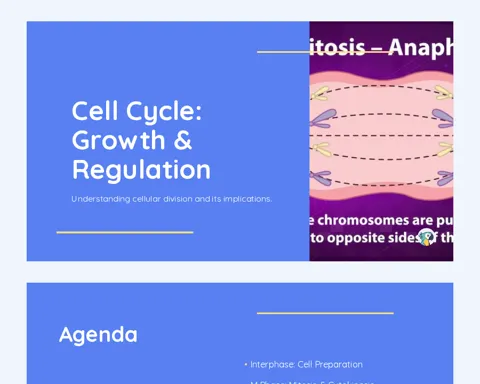
Presentation
Cell Cycle: Growth & Regulation

Mr Waleed
-

Presentation
Bioenergetics: Energy in Life
IA
Israel Afolayan
-
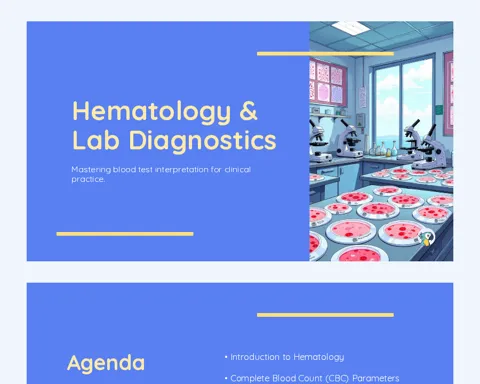
Presentation
Hematology & Lab Diagnostics

Mohammad Qabaja
-

Join a community of teachers directly on WhatsApp
Connect with other teachers, receive and share materials, tips, training, and much more!

Reinvent teaching













Resources
2026 - All rights reserved