Summary Tradisional | Musical Expression
Contextualization
Musical expression is one of the most ubiquitous and universal aspects of human experience. From time immemorial, people have harnessed music to convey emotions, narrate stories, and celebrate significant milestones. Music finds its place in numerous settings such as religious ceremonies, cultural festivals, joyous gatherings, and even in daily life, like listening to a tune while studying or working. Given its regular presence in our lives, it becomes crucial to appreciate its various forms and styles.
Music exists in myriad ways, showcasing the cultural and artistic variety of communities globally. The primary types of music are classical, popular, and folk music. Each category boasts unique features, specific instruments, and different roles within society. Grasping these distinctions and valuing musical diversity is vital for deepening our cultural awareness and nurturing a more refined artistic sensibility.
To Remember!
Types of Music
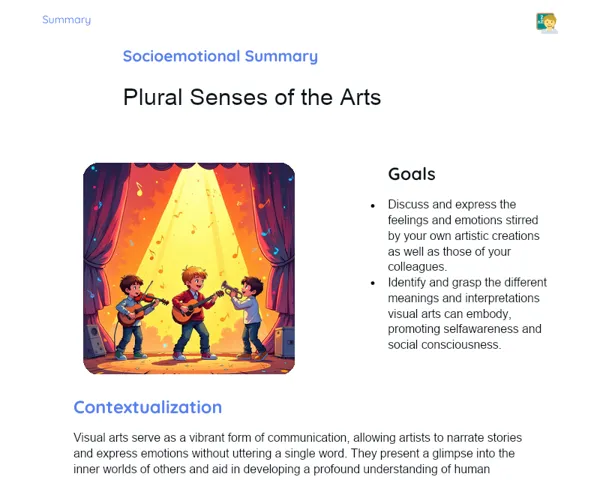
Music can be classified into different types, each with its unique characteristics and contexts of usage. The main genres include classical, popular, and folk music. Classical music is renowned for its complexity and depth, typically using instruments like the violin, piano, flute, and cello. These compositions are often elaborate, rich in layers of melody and harmony. In contrast, popular music is more relatable and encompasses genres like pop, rock, and hip-hop, using instruments such as guitar, drums, and keyboards that often speak to everyday themes. Folk music represents traditional sounds and embodies the essence of a culture, passed down through generations, often featuring instruments like accordions and pandeiros.
Recognising different types of music is essential to appreciate the cultural richness and diversity music presents. Each genre has its place in society, serving pivotal roles in both formal ceremonies and lively celebrations or in preserving age-old cultural traditions. For instance, classical music frequently plays at formal events and concerts, whilst popular music is the heartbeat of parties, concerts, and media broadcasts. Similarly, folk music thrives during cultural festivities and community celebrations.
Studying various music types also aids in comprehending the cultural and historical influences that have shaped each genre. Classical music, for instance, has roots in Europe and has matured through centuries, both influencing and being influenced by various artistic movements. Popular music mirrors social and technological advancements, rapidly adapting to new trends. Folk music serves to preserve and narrate the tales and traditions of specific communities, keeping their cultural memory intact.
To genuinely appreciate musical diversity, it's important to listen to and explore various music types, honing in on their unique traits and their context. This exploration enriches our cultural understanding and enhances our artistic sensibility.
-
Classical music: complexity and sophistication, featuring instruments like the violin and piano.
-
Popular music: accessibility, with genres such as pop, rock, and hip-hop, employing instruments like guitar and drums.
-
Folk music: a representation of cultural traditions, traditionally transmitted, involving instruments like accordion and pandeiro.
Musical Instruments
Musical instruments are crucial tools for creating and presenting music. Each music genre typically utilises different instruments, contributing to its unique sound. For instance, classical music employs the violin, piano, flute, and cello, which enable a broad range of expression and are often featured in orchestras and chamber music. Popular music, on the other hand, prominently uses electric guitars, drums, bass, and keyboards—these instruments are versatile and fit into various genres such as rock, pop, and hip-hop. In folk music, you might often hear instruments like the accordion, zabumba, and pandeiro, which reflect the cultural context of specific regions and are employed during community events and rituals.
Each instrument carries distinctive attributes that influence the creation and performance of music. The violin, for instance, is cherished for its ability to produce long, sustained notes, perfect for emotional melodies. In contrast, the electric guitar is loved for its range of sounds and effects, making it a staple in many popular music genres. The accordion, integral to many folk traditions, is recognised for its unique sound and ability to play chords and melodies at the same time.
Alongside their sonic qualities, instruments also embody cultural and historical significance, often linked to specific traditions. The flute, for example, has historical roots across various cultures, from ancient times to the present. The electric guitar became synonymous with rebellion and innovation during the rock movement of the 1960s, while the pandeiro is woven into the vibrant tapestry of Brazilian folk music, embodying the spirit of festivals and samba circles.
Recognising the diversity of musical instruments and their characteristics is fundamental for appreciating musical creativity. Understanding the instruments prevalent in various music types helps identify and value each style's nuances and understand the skills required to play them.
-
Violin: known for long, sustained notes, commonly used in classical music.
-
Electric guitar: offers a wide range of sounds and effects, essential in popular music.
-
Accordion: recognised for its distinctive sound, prevalent in folk music.
Elements of Music
Music comprises several elements that together create a complete auditory experience. The three core elements are melody, harmony, and rhythm. Melody is the series of notes that are prominent in a piece, often the unforgettable part of a song. Melodies can be straightforward or intricate and are key in conveying the music's primary message or emotion. Harmony entails the combination of notes played simultaneously to support the melody, enriching the music's depth. Rhythm represents the timing of notes and pauses within the music, giving it structure and keeping listeners engaged.
Each element is fundamental in musical composition and performance. Melody is often considered the 'soul' of music, as it is the component that listeners tend to remember and hum. A well-crafted melody can stir feelings and create strong connections with the audience. Harmony enhances the melody by layering sounds, creating a richer listening experience. It can range from simple, as in a folk tune with basic guitar chords, to complex, as seen in an orchestral symphony that incorporates myriad chords and harmonic progressions. Meanwhile, rhythm injects movement into music; a defined rhythm compels listeners to sway or clap along.
Furthermore, melody, harmony, and rhythm interact to form a cohesive musical piece. Their interplay can differ greatly according to the musical style. For instance, in classical music, you might find a rich and intricate melody, supported by elaborate harmonies, while the rhythm can be subtle. In contrast, a pop song might feature a more straightforward melody, with harmony complementing it without overshadowing it, and a strong, steady rhythm to maintain the music's energy. In folk music, the melody and rhythm often take centre stage, while harmony tends to be simpler, underlining the main melody.
Understanding these core elements is essential for anyone interested in a deeper exploration of music. This knowledge enhances the appreciation of music we encounter and provides a robust foundation for those looking to learn an instrument or compose their own songs.
-
Melody: the sequence of notes that stand out, often the most memorable part of the music.
-
Harmony: a set of notes played together, adding depth to the overall sound.
-
Rhythm: the timing and patterns of notes and pauses, essential for structuring music.
Key Terms
-
Musical Expression: The use of music to convey emotions, stories, and cultural legacies.
-
Classical Music: A genre that utilises instruments like the violin and piano, noted for its depth and complexity.
-
Popular Music: An easily accessible genre encompassing styles like pop, rock, and hip-hop, featuring instruments like guitar and drums.
-
Folk Music: Traditional music that epitomises the culture of a community, with instruments like the accordion and pandeiro.
-
Musical Instruments: Tools employed for creating and performing music, varied by music type.
-
Melody: A series of distinct notes in a piece, typically the most unforgettable segment.
-
Harmony: Notes layered together to accompany the melody, enriching the music's texture.
-
Rhythm: The timing structure of notes and rests in music, critical for establishing flow.
Important Conclusions
In this lesson, we delved into various forms of musical expression, including classical, popular, and folk music. We explored the unique features and typical instruments associated with each genre, such as the violin and piano in classical compositions, the guitar and drums in popular music, and the accordion and pandeiro in folk traditions. Additionally, we reviewed the fundamental elements of music: melody, harmony, and rhythm, and how these components synergise to create cohesive music.
Grasping these music forms and their elements is essential to appreciate the cultural richness and diversity music provides. Each musical genre plays its distinctive role in society, ranging from formal ceremonies to joyous celebrations. Furthermore, understanding the instruments and their contributions to different music styles aids in grasping the techniques and skills crucial for playing them.
The insights gained from this lesson extend beyond theoretical knowledge. Music permeates our lives, and knowing its varied forms allows us to engage more deeply with the artistic and cultural expressions around us. We encourage students to keep exploring and listening to different types of music, fostering a heightened artistic sensibility and expansive cultural insight.
Study Tips
-
Listen to various types of music, focusing on the instruments and musical elements in each.
-
Research the history and evolution of different music genres for a deeper understanding of their characteristics and cultural influences.
-
Identify the melody, harmony, and rhythm in the music you encounter daily, honing your skills in musical analysis.