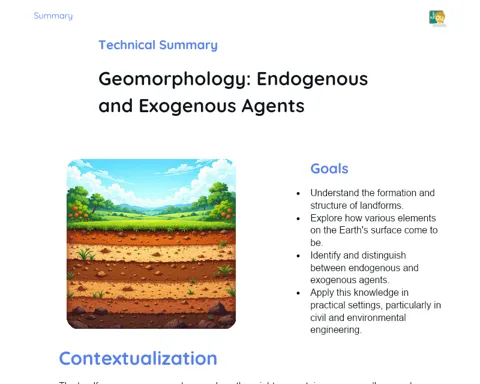
In the enchanting Land of Soils, there existed a thriving kingdom segmented into various territories, each with its own distinct features and personality. Each region was governed by its own 'Soil Rulers', who held unique competencies based on their soil composition. This narrative invites our heroes (you, dear students!) to embark on a journey to discover these territories, understand their quirks, and tackle challenges to become genuine Soil Masters.
Once, in the very heart of this kingdom, a council was called by the Elders of Soils to deliberate on the vital role soil plays in our lives. This council was a grand gathering, with rhythmic tabla beats in the background and a vast round table embellished with symbols of the four elemental soils. Each Elder represented a different type of soil: Sandy Soil, Clay Soil, Silty Soil, and Humus Soil. Clad in regal attire symbolizing their respective domains, they had an important mission for our heroes to gain a profound understanding of each territory for the purpose of preserving and sustainably utilizing soils. The atmosphere was filled with anticipation as the heroes received their maps and tech kits, furnished with tablets and essential apps for their expedition.
Our heroes, divided into small groups, embarked on an epic adventure. Their first destination was the territory of Sandy Soil, ruled by the intrepid adventurer Arid, renowned for his resilience in the harshest environments. Arid led them across expansive deserts and sun-kissed beaches, where they felt the loose texture of the soil and watched as water disappeared quickly upon pouring. With a warm smile, he asked the first question: “What is the main characteristic of sandy soil that makes it suitable for deserts and beaches?” By answering correctly, “its high porosity allows rapid water drainage”, the heroes unlocked new knowledge, elaborated in the digital interface they were using.
Leaving the golden sands behind, the heroes ventured into the territory of Clay Soil, led by the inventive Clay, whose land was famed for its pliability. They were greeted by beautiful green valleys and rolling hills, with gentle waterfalls that sparkled in the sunlight. Clay, full of passion and creativity, guided them through artisan workshops where clay was molded into beautiful pots and farmers tended to lush fields. Touching and shaping the soil, they felt its fine particles. Clay presented a straightforward question: “How does the composition of clay soil influence its uses in agriculture and pottery?” Responding highlighted that this soil, with its ability to retain water and nutrients, is essential for growth and for creating exquisite pottery, a revelation that shone in their educational tablets.
They then moved on to the territory of Silty Soil, overseen by the wise Silt, an elder with profound knowledge about the soil’s hidden treasures. Rich with fertile fields and vast plantations, the air was filled with the fresh scent of moist earth. Silt, with his calm demeanor, took them to a bubbling stream where silty soil thrived along the banks, creating perfect conditions for diverse crops. Sitting thoughtfully by the water's edge, he presented an intriguing riddle: “What are the main advantages of silty soil for agriculture?” After careful discussion, our heroes concluded that this soil’s high fertility and excellent water retention made it ideal for a variety of plants. The correct answer radiated excitement through the group as they celebrated their findings on their learning devices.
Finally, the heroes arrived at the lush domain of Humus Soil, home to the caring Humus, the nurturer of nature. The scenery in this area was breathtaking, with dense forests and blooming gardens which looked like a scene from a fairytale. Humus, embodying wisdom and a deep love for the land, guided them along winding trails blanketed with leaves. He explained how humus soil, rich in organic matter, nourished an incredible ecosystem. Stopping beside an ancient tree, he challenged them with the last question: “Why is humus soil critical for forest ecosystems and gardens?” Reflecting on their journey, the heroes reasoned that its richness in organic matter and microorganisms was essential for fertility and biodiversity, a fact illuminated on their digital quiz screens.
Through completing these challenges, our heroes not only deepened their understanding of different soil types but also mastered the art of documenting and sharing their discoveries using digital tools like Google Earth and social media. With enriched minds and skilled hands wielding modern technology, they were officially celebrated as Soil Masters by the kingdom, receiving digital accolades and certificates adorned with vibrant holograms.
This adventure expanded their knowledge of soil types and reinforced the need for sustainable practices to safeguard these vital resources. As technology interweaves with geography, they learned to use these digital tools for the greater good, resulting in practical solutions for our everyday lives. And so, our story continues as each Soil Master embraces a future equipped not only with knowledge but a heartfelt commitment to preserving our precious planet.