Chemical Bonds: Metallic | Socioemotional Summary
Objectives
1. 🌟 Understand the structure of metallic bonding through the concept of 'sea of electrons'.
2. 💡 Identify and explain the properties of metallic compounds, such as electrical and thermal conductivity, based on their electronic structure.
Contextualization
🔍 Imagine the electrical cables we see every day, whether at home, school, or on the streets. Have you ever wondered why they are made of metal? The answer lies in metallic bonding and the 'sea of electrons'! These free electrons allow metals to conduct electricity efficiently. Understanding this bonding not only helps us understand how our devices work, but also makes us reflect on the importance of flexibility and adaptability in our own lives. 🌐
Important Topics
Structure of Metallic Bonding
Metallic bonding is an essential type of chemical bonding that occurs between metal atoms. It is characterized by an arrangement of positive metallic ions immersed in a 'sea of free electrons'. This structure allows electrons to move freely between atoms, creating a strong and cohesive bond that provides unique properties to metals.
-
🔄 Sea of Electrons: The electrons that circulate freely among the metallic ions provide internal cohesion and strength to the metal.
-
🌐 Cohesion and Strength: The free circulation of electrons allows metals to maintain a solid but flexible structure.
-
🔬 Analogies: Imagine a pool filled with balls (metallic ions) where water (electrons) flows around them, keeping them together without direct contact.
Properties of Metals
Metals have remarkable properties due to their unique electronic structure. Among these properties are electrical and thermal conductivity, malleability, and ductility. All of these characteristics stem from the behavior of electrons in the metallic structure.
-
⚡ Electrical Conductivity: The freedom of movement of electrons allows for efficient conduction of electrical current, essential for the operation of electronic devices.
-
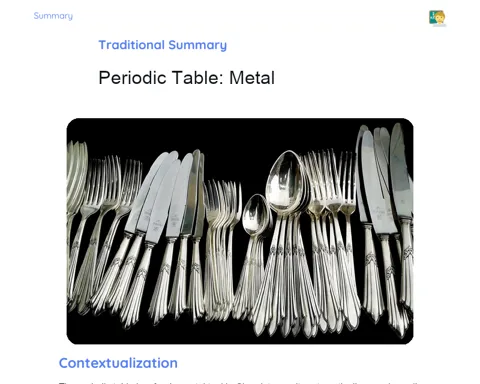
🔥 Thermal Conductivity: Free electrons also facilitate the transfer of thermal energy, making metals good conductors of heat, ideal for cooking utensils.
-
🔧 Malleability and Ductility: The presence of the 'sea of electrons' allows metallic ions to slide past one another without breaking the structure, making metals moldable and able to be stretched into wires.
Practical Examples
The concepts of metallic structure and 'sea of electrons' are not just theoretical; they have direct practical applications in our daily lives. From electrical cables to cooking pots, understanding these properties helps us appreciate the intersection between science and our everyday life.
-
🔌 Electrical Cables: Made of copper or aluminum, these materials are chosen for their excellent electrical conductivity.
-
🍳 Cooking Pots: Products like stainless steel or aluminum are used in cooking utensils due to their ability to conduct heat well.
-
🏭 Construction and Engineering: Metals are widely used in construction due to their strength and malleability.
Key Terms
-
🛠️ Metallic Bonds: A type of chemical bond that occurs between metal atoms, characterized by positive metallic ions immersed in a 'sea of free electrons'.
-
🌊 Sea of Electrons: A concept that explains the free circulation of electrons among metallic ions, providing cohesion and strength to the metal.
-
⚡ Electrical Conductivity: The ability of metals to conduct electrical current efficiently due to the free movement of electrons.
-
🔥 Thermal Conductivity: The ability of metals to transfer thermal energy efficiently, facilitated by the free movement of electrons.
-
🔧 Malleability: A property of metals that allows them to be shaped without breaking, due to the flexibility provided by the 'sea of electrons'.
-
🧵 Ductility: The ability of metals to be stretched into wires without breaking, also due to the 'sea of electrons'.
To Reflect
-
💭 How can understanding the 'sea of electrons' change the way we see and use metals in our daily lives?
-
🌱 In what ways can the flexibility and adaptability of electrons in metals serve as a metaphor for emotional regulation and resilience in our lives?
-
🤔 What strategies can you use to apply your knowledge of metallic bonding and its properties in future projects or in solving practical and emotional problems you encounter?
Important Conclusions
-
🔍 Metallic bonding is essential to understanding the unique properties of metals, such as electrical and thermal conductivity, malleability, and ductility.
-
⚡ The 'sea of electrons' is the key concept that explains why metals are so efficient at conducting electricity and heat.
-
🔧 Understanding these principles helps us better appreciate and utilize metals in our daily lives and prepares us for future studies and practical applications.
Impact on Society
🔥 Impact on Society: Understanding metallic bonds has a profound impact on our daily lives. Imagine the electronic devices we use daily, such as cell phones, computers, and televisions – they all depend on the efficient electrical conduction provided by metals. Furthermore, the durability and malleability of metals are fundamental in construction, allowing for the creation of strong and flexible structures.
🌱 Emotional Connection: The same characteristics that make metals so valuable in technology and engineering can also be seen as a metaphor for our emotional lives. The flexibility and adaptability of electrons within metals remind us of the importance of being resilient and adaptable in the face of daily emotional challenges. By understanding and applying the concept of 'sea of electrons', we can learn to work better with our emotions, maintaining a healthy and efficient emotional balance.
Dealing with Emotions
🧘♀️ RULER Exercise for Home: While studying metallic bonding, take a few minutes to pause and reflect on your emotions. First, recognize the emotions you are feeling about studying – are you excited, confused, or frustrated? Understand the causes of these emotions, whether it's a struggle with the concept or the excitement of learning something new. Name your emotions accurately to gain clarity on what you are feeling. Express these emotions appropriately, whether talking to a peer or writing in a journal. Finally, regulate your emotions using techniques such as deep breathing or short breaks to maintain focus and calm during your studies.
Study Tips
-
📚 Regular Review: Set aside time to review the concepts discussed in class, such as the structure of metallic bonding and the properties of metals. This will help solidify your knowledge.
-
🧪 Practical Experiments: Conduct small experiments at home, such as building simple circuits, to observe the electrical conduction of metals in practice. These practical exercises facilitate theoretical understanding.
-
📖 Additional Resources: Use educational videos and online articles to complement what was discussed in class. Platforms like YouTube and Khan Academy have great resources on metallic bonding.