Objectives
1. Identify the main vegetation formations and understand how factors like climate, soil, and topography influence their distribution and characteristics.
2. Develop observation and geographical analysis skills, linking theory to practice through engaging activities.
Contextualization
Did you know that Brazil is one of the most diverse countries in terms of vegetation in the world? 🌍 With a vast landscape, it ranges from the dense Amazon rainforest to the vast stretches of caatinga in the Northeast. This incredible variation is directly influenced by geographical factors such as climate, soil, and topography. Understanding how these elements affect vegetation is crucial not just for geography, but also for environmental conservation and sustainable planning. Let’s delve into the wonders and challenges of our vegetation together!
Important Topics
Tropical Rainforests
Tropical rainforests, like the Amazon, are known for their rich biodiversity and vital role in maintaining global environmental balance. They flourish in areas with warm, humid climates and regular rainfall throughout the year. The soil in these forests is typically low in nutrients due to the rapid decomposition of organic matter, which leads plants to develop unique adaptations, such as shallow roots that extract nutrients from the soil and litter.
-
Extraordinarily high biodiversity, home to countless species of trees, plants, animals, and insects.
-
Crucial for regulating the global climate, serving as a significant carbon sink.
-
Conservation challenges due to rampant exploitation and deforestation, with both local and global repercussions.
Caatinga
The caatinga is typical of Brazil's semi-arid regions, characterised by semi-arid or arid climates. This implies that plants in this zone must adapt to prolonged droughts and high temperatures. The vegetation here tends to be xerophytic, meaning these plants have adapted to conserve water, featuring small or modified leaves and fleshy stems.
-
Plants adapted to hot and dry conditions, utilising water conservation strategies.
-
Significant biodiversity, although often overlooked due to harsh climatic conditions.
-
Susceptible to climate change and degradation from agricultural practices and land use.
Prairies
Prairies are ecosystems dominated by herbaceous plants and known for their fertile soils and temperate climates. They can be found in various global locations, including southern Brazil, where they are referred to as pampas. Given their soil and climatic conditions, prairies are suitable for agriculture, but the transformation of these areas into farmland has greatly contributed to the loss of global biodiversity.
-
Fertile soil and temperate climate that favour agriculture and grazing.
-
Critical for conserving native species and maintaining ecosystem services.
-
Under significant threat due to agricultural and urban development.
Key Terms
-
Vegetation: The collection of plants that naturally grow in a specific region, contributing to its unique landscape.
-
Biodiversity: The wide range of life on Earth, encompassing species variety, genetic variation, and different ecosystems.
-
Xerophytes: Plants specially adapted to dry conditions with mechanisms to conserve water.
For Reflection
-
How could the destruction of a tropical rainforest impact not just local biodiversity, but the global climate as well?
-
In what ways might the adaptations of xerophytic plants in the caatinga inspire innovations in agriculture and water conservation technologies?
-
What role do prairies play in sustaining biodiversity, and how can we balance agricultural needs with the conservation of these ecosystems?
Important Conclusions
-
We explored the remarkable diversity of Brazilian vegetation and discussed how climate, soil, and topography shape unique biomes like the Amazon, Caatinga, and Pampas.
-
We highlighted the importance of preserving these ecosystems for local biodiversity and for addressing global issues like climate change and sustainability.
-
We reinforced the idea that geographical knowledge is vital for understanding and tackling environmental challenges, and encouraged responsible, sustainable actions.
To Exercise Knowledge
Create a vegetation logbook! Choose a day during the week to observe and jot down the plants you find in your neighbourhood or nearby area. Record important characteristics like type of foliage, height, flower colour, and any other interesting details. Try to identify some plants and research how they adapt to the local environment.
Challenge
Brazilian Biome Challenge! Pick a Brazilian biome (like the Atlantic Forest) and create a poster showcasing the characteristic plants, animals, and current conservation issues. Be sure to use recyclable materials and let your creativity shine!
Study Tips
-
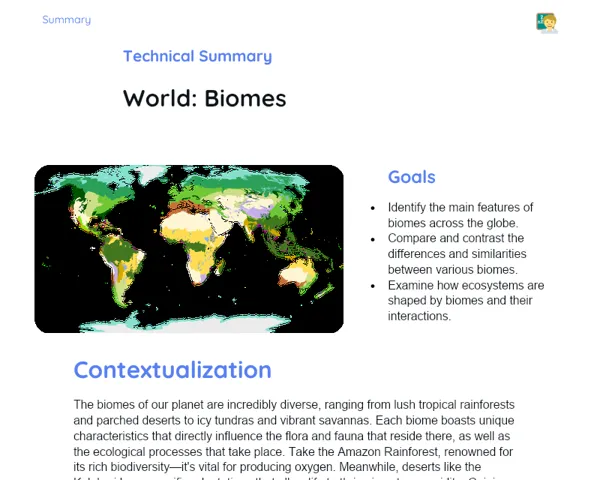
Utilise online interactive maps to explore the distribution of biomes in Brazil and globally. This can help you visualise the connections between climate, soil, and vegetation.
-
Watch nature conservation documentaries, like 'Our Planet' and 'Eternal Amazon.' These offers valuable insights and can spark a deeper interest in the topic.
-
Engage with online groups or forums focused on conservation and the environment to share ideas and learn from others who have a shared passion.