Global Geopolitical Concepts | Socioemotional Summary
Objectives
1. Understand the basic concepts of geopolitics and its main theories.
2. Comprehend the influence of geography on local and global policies.
3. Develop socio-emotional skills through the analysis of political decisions and their impacts on society.
Contextualization
Have you ever stopped to think about how political decisions affect the lives of billions of people around the world? 🌍 From disputes over natural resources to strategic alliances, geopolitics shows us the complexity of international relations and how each choice can have significant global impacts. Let's discover together how power, territory, and resources influence the world stage!
Important Topics
Power
Power is the capacity of a state to influence other states or achieve its own objectives. It manifests in various forms, such as military, economic, and diplomatic power. Understanding these forms of power is crucial for comprehending how nations interact and position themselves on the global stage.
-
Military Power: The armed force of a country, which can be used for defense or imposing will. 📜 Example: The USA and its military budget.
-
Economic Power: The financial capacity and economic resources that a country possesses, influencing global markets. 🌐 Example: China and its growing economic influence.
-
Diplomatic Power: The ability of a country to negotiate and form alliances to achieve objectives without the use of force. 🤝 Example: The European Union and its trade negotiations.
Territory
Territory refers to the geographical area that a state controls. The importance of territory goes beyond its physical borders, as it involves natural resources, strategic location, and national identity. The dispute for territories is one of the main reasons for geopolitical conflicts.
-
Natural Resources: Elements such as oil, gas, and minerals that are crucial for a country's economy. 🌿 Example: The dispute over oil in the Middle East.
-
Strategic Location: A country's geographical position can be vital in trade or military routes. 🚢 Example: The Suez Canal and its importance for global trade.
-
Borders: The physical delimitations that can be areas of tension or cooperation between countries. 🗺️ Example: The border between India and Pakistan.
Sovereignty
Sovereignty is the supreme authority of a state over its territory and population, without external interference. It is a fundamental concept for understanding international relations, as it defines the internal power of states and their interactions with other nations.
-
Internal Authority: The power to create and implement laws within its borders. 🏛️ Example: The legislative sovereignty of countries in the European Union.
-
Independence: The ability of a state to make decisions without external influences. 🗽 Example: Independence movements in various parts of the world.
-
International Recognition: The recognition of a sovereign state by other countries and international organizations. 🌍 Example: The process of recognizing Palestine as an independent state.
Key Terms
-
Geopolitics: The study of geographical influences on global politics and international relations.
-
Power: The capacity of a state to influence other states or achieve objectives.
-
Territory: The geographical area controlled by a state.
-
Sovereignty: The supreme authority of a state within its territory.
-
Maritime Power Theory: The importance of controlling the seas for global power.
-
Land Power Theory: Controlling the central areas of Eurasia to dominate the world.
-
Rimland Theory: Controlling the periphery of Eurasia is crucial.
-
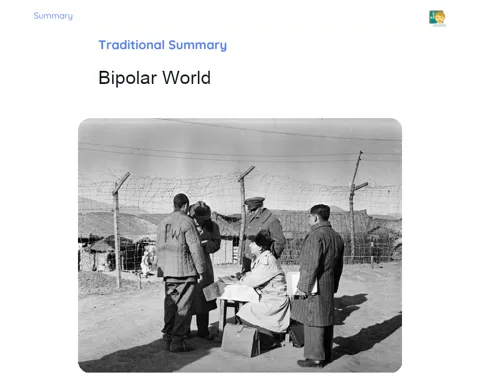
Cold War: A geopolitical conflict between the USA and the Soviet Union.
To Reflect
-
How do global political decisions affect your daily life and that of your community? 🌐
-
What is the importance of understanding the emotions and perspectives of other countries in international negotiations? 💬
-
How can you use your knowledge of geopolitics to make more informed and responsible decisions in your life? 🧠
Important Conclusions
-
Geopolitics helps us understand how political decisions affect the lives of billions of people around the world.
-
Power, territory, and sovereignty are essential components for understanding international relations and global conflicts.
-
Understanding geopolitical theories, such as Maritime Power, Land Power, and Rimland, gives us deeper insights into the strategies of countries.
-
The Cold War is an important historical example illustrating the division of the world into ideological blocs and its lasting consequences.
-
Globalization and climate change are current themes that show the interconnection and interdependence of countries on the global stage.
Impact on Society
Geopolitics has direct impacts on daily life, such as fuel prices, which can be influenced by decisions made by oil-producing countries. Additionally, geopolitical issues can affect access to imported products and the economic stability of a nation. Understanding these impacts helps us make more informed and conscious decisions in our lives. Emotionally, comprehending geopolitics can generate feelings of empathy and global responsibility. By realizing how a decision in one part of the world can affect lives in another, we develop a sense of solidarity and the importance of collective actions to face global challenges, such as climate change and humanitarian crises.
Dealing with Emotions
To deal with emotions while studying geopolitics, I propose that each student recognizes (Recognize) their own feelings when reading international news: do you feel anxious, confused, or curious? Then, understand (Understand) the causes of these emotions: is it fear of the unknown, indignation at injustice, or a sense of helplessness? Label (Label) these emotions correctly, such as anxiety or frustration. Next, express (Express) these emotions appropriately, perhaps by discussing them with peers or writing about them. Finally, regulate (Regulate) your emotions by practicing mindfulness exercises or simply disconnecting for a moment to clear your mind.